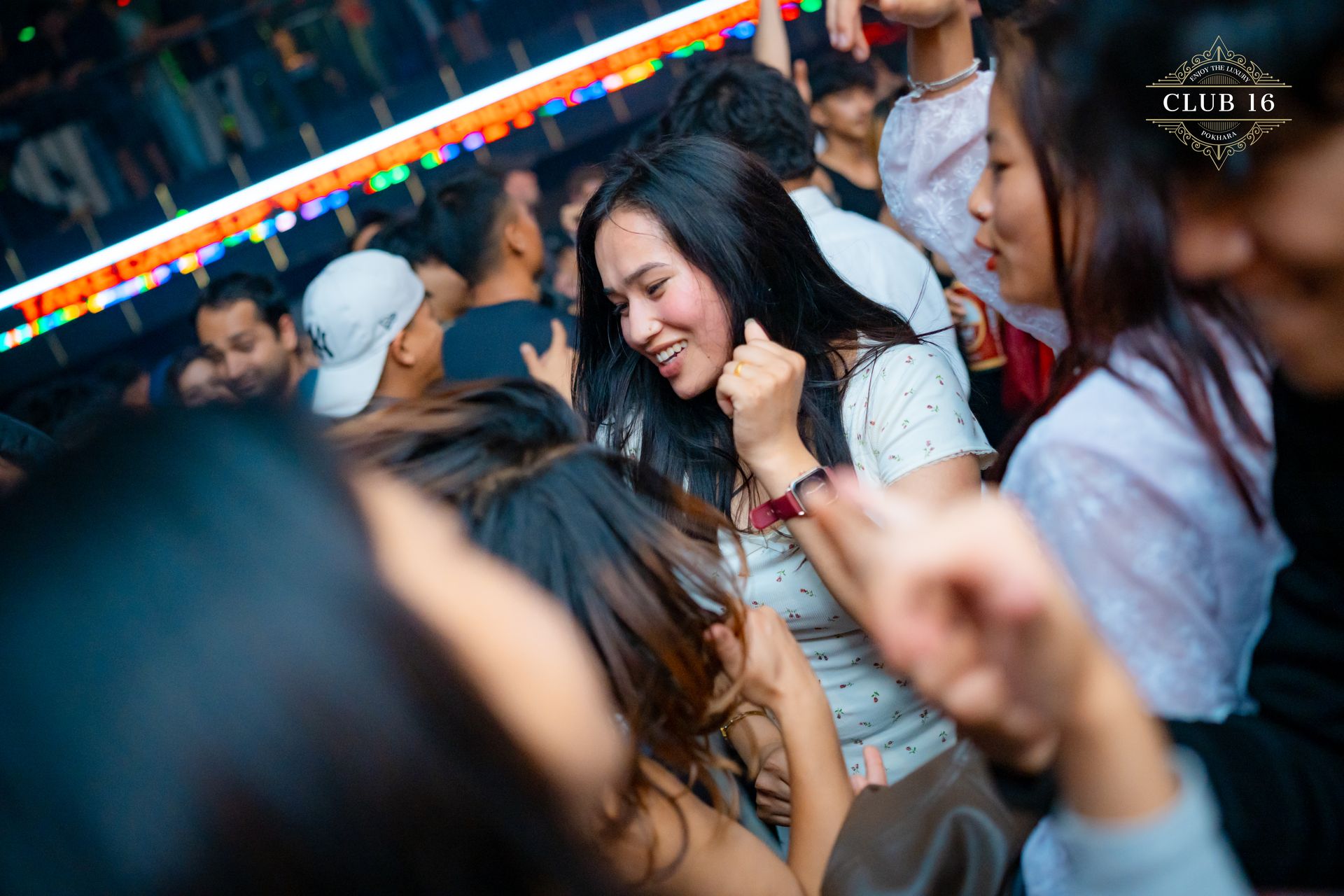
There is a moment, somewhere around 1 a.m. on a Saturday in Nepal, where you suddenly understand the whole thing. The DJ drops a remix of a Nepali pop track you half-recognise, the crowd around you — locals, travellers, college kids, off-duty trekking guides — knows every word, and a couple of strangers grab your hands and pull you into the chorus. Nobody is performing for anyone. Everyone is just in it. That moment is Nepal's party culture in a single frame: warm, unselfconscious, generous to outsiders, and quietly proud of itself.
This is the guide we wish we'd had when we first started throwing parties in this country. It's not a list of bars. It's a map of how Nepalis actually celebrate — what shaped the culture, where it lives now, how the codes of conduct work, and how to walk into it like you belong. Because once you understand the rhythm, Nepal's nightlife opens up in a way that day-trippers never see.
A culture built on celebration, not nightlife
To understand Nepal's party scene, you have to start with the calendar. This is a country with more festivals than working weeks. Dashain, Tihar, Holi, Teej, Indra Jatra, Lhosar, Chhath, Buddha Jayanti — every few weeks, an entire valley dresses up, lights up, and gathers. Long before the first proper nightclub opened, Nepalis were already master party hosts. The dance floor just moved indoors.
That heritage matters because it shapes what a "party" means here. In a lot of Western cities, going out is something you do despite the rest of life — a release valve. In Nepal, going out is a continuation of the same hospitality instinct that powers a wedding, a Tihar reunion, or a temple festival. You arrive with friends, you leave with more friends, and somebody on the way out invites you to a momo place at 4 a.m. The transactional nightlife model never quite took root. The relational one did.
Read more on this in our deeper dive into Nepal's club culture — it explains why a Kathmandu Friday and a Pokhara Friday feel different, but both feel distinctly Nepali.
The three layers of Nepal's party scene
If you zoom out, modern Nepali nightlife stacks into three layers, and most great nights touch all three.
Layer one: festival and family celebration. This is the foundation — Tihar's Bhailo and Deusi roaming groups, Holi water-fights that turn into all-day block parties, Teej dances at home with women in red, wedding receptions that genuinely don't end. You can't book a ticket to this layer; you get invited in, usually within 24 hours of meeting a local who likes you. Our breakdown of Nepal's festival parties covers the big ones if you want to plan a trip around them.
Layer two: live music and lounge culture. Sandwiched between festivals and full clubs, Nepal has a beautiful informal layer of jazz bars, blues bars, rooftop lounges, and dohori (folk duet) restaurants where bands play, audiences clap on the off-beat, and conversations stay loud but linear. Thamel in Kathmandu and Lakeside in Pokhara are the obvious hubs, but you'll find versions of this layer in Bhaktapur, Patan, even smaller towns like Bandipur. The whole Nepal live music scene deserves its own pilgrimage if you're into it.
Layer three: nightclubs. This is the layer that's exploded in the last decade — purpose-built clubs with international-grade sound, lighting rigs, resident DJs flying back and forth from Mumbai and Bangkok, and dance floors that fill by 11 p.m. and don't clear until staff start switching off lights. Club 16 in Pokhara sits at the top end of this layer, but there are credible rooms across the country. We did a full ranking in our best clubs in Nepal write-up.
The trick to a great Nepali night is not picking one layer — it's threading two or three of them in sequence. Dinner at a dohori restaurant, drinks at a jazz bar, then dancing at a club. Locals do this naturally. Visitors who try it always say it was the best night of their trip.
What Nepalis actually play, drink, and wear
Music here is a chaotic, beautiful mash-up that mirrors the country's geography. A single set at a mainstream Nepali club will move from Bollywood remixes to Hindi-Punjabi hip-hop, into Nepali pop, then out to global house and EDM, occasionally back to a Nepali folk track flipped into a club edit. The dancefloor takes it all. There's no genre snobbery. If it makes the crowd move, it plays. Our resident DJs have started threading more original Nepali tracks and local artist remixes into peak hour, and the crowd responds to it harder than the international top-40, every time. The full picture of where the local sound is heading is in our Nepal DJ scene piece.
Drinking culture skews social and relaxed. Beer is the lingua franca — Gorkha, Tuborg, Everest, sometimes the imported stuff. Local raksi makes appearances at home parties and festival nights. In clubs and cocktail bars, the menu has caught up with global trends — properly built cocktails, mocktails, hookah lounges. What you won't see much of: aggressive pre-gaming, blackout-as-goal culture, or the kind of bottle-service flexing common in some Asian capitals. Drinking here is a backdrop to the conversation and the music, not the headline. If you want a deep dive on the local pour, see our Nepal cocktail culture guide.
Dress code is its own beautiful contradiction. By day, Nepal is one of the most relaxed places on the planet — trekking pants and a fleece will get you into most restaurants. By night, in Pokhara's Lakeside and Kathmandu's Thamel, people actually dress up. Sneakers and a clean shirt for guys. Heels and a going-out dress for women. Not formal, not corporate — but a clear signal you're treating the night as something. Locals will appreciate the effort. (For Club 16 specifically, our Nepal nightclub dress code post has the full breakdown.)
The unwritten rules
Every party culture has codes of conduct that locals know in their bones and visitors have to learn the hard way. Nepal's are mostly common sense, but here are the ones that catch people out:
Greetings matter. Walk into any venue and someone — bouncer, host, owner — will probably make eye contact, smile, sometimes a namaste. Acknowledge it. Walking past staff like they're furniture is the fastest way to mark yourself as a tourist who hasn't tuned in yet.
Group energy beats solo energy. Nepali nights run on groups. Showing up alone is fine, but the social texture of the night is built around tables of friends, cousins, work crews. Within ten minutes of arriving, you can be folded into one of those tables if you're open and warm. Within an hour, you can be ordering shots together. Don't fight that current.
Photos are everyone's business. Phones come out constantly — every group photo is a thirty-second project involving multiple angles. Lean into it. The flip side: don't take photos of strangers, especially women, without consent. The line is sharp.
Money is loose, never theatrical. Splitting bills is normal. Treating a new friend is common. Showy spending is not respected. The wealthiest people in the room are usually the ones you'd never identify as wealthy. We unpack this further in our nightclub etiquette piece.
Late means really late. Nepali nights peak between midnight and 3 a.m. Showing up to a 9 p.m. club at 9 p.m. means you'll be drinking alone for two hours. Arrive at 11. Plan to leave at 4. Eat after.
Kathmandu vs Pokhara: two different Saturday nights
The two main party cities run on different operating systems. Kathmandu — specifically Thamel and the surrounding pockets — is dense, loud, traveller-heavy, jazz-bar rich, with a club scene that fights for square footage. Pokhara is wider, calmer, lake-flanked, with a lakeside strip where bars and clubs sit shoulder-to-shoulder and the air smells of grilled food and bonfires. A Friday in Thamel feels like sneaking through a stack of small rooms each playing different music. A Friday in Pokhara's Lakeside feels like a single long block party.
We're biased — Club 16 is on Street 16, Lakeside, Pokhara, and we genuinely think the city's the country's nightlife capital right now. The full case is in our Kathmandu vs Pokhara nightlife comparison. The short version: Kathmandu has the variety, Pokhara has the night. The dance floor experience is bigger, the rooms are purpose-built, the production value is higher, the views walking home are better.
Where Club 16 fits
Club 16 was built around a simple read of Nepal's party culture: people here want a real night, not an exclusive one. So entry is free. Doors are open from 9 p.m. to 6 a.m. The sound system is cinema-grade LW — the same family of speakers you'd hear in a Mumbai or Bangkok superclub. We run a VIP lounge for people who want it, a hookah service for people who want a slower pace, free pick-up and drop within Pokhara so nobody has to worry about getting home, and a DJ course for the locals who want to learn the craft.
The result is a room that genuinely mixes — Nepalis from Pokhara and Kathmandu, Indian visitors, trekkers coming off the Annapurna circuit, expats from across South Asia, weekend visitors from Lumbini and Chitwan. On any given Saturday, you'll hear Hindi, English, Nepali, Korean, and Greek on the same dance floor. That's not marketing language. That's just what happens when the culture you've built welcomes people instead of filtering them.
How to walk into a Nepali night
Here's the playbook we'd give a friend visiting for the first time.
- Pick your city — Kathmandu for variety, Pokhara for the headline night.
- Eat early and well. A proper Nepali thali at 7 p.m. is your foundation. Late-night food is fantastic but use it to extend the night, not replace dinner.
- Layer your venues. One live-music spot, one cocktail or lounge, one club. Move between them.
- Dress one notch up from your daytime self.
- Walk in around 11. Stay until at least 2.
- Talk to strangers. This is the country that invented hospitality.
- End with momos at a 4 a.m. spot. Negotiable. Recommended.
You don't need to plan beyond that. Nepal's party culture will do the rest. People will pull you in. Tracks will surprise you. Someone you've known for an hour will hand you a drink and call you brother or sister. By the end of the night, you'll have learnt that the dance floor here is just another version of the festival square — a place built for a country that has always known how to celebrate.
If you're heading to Pokhara, swing by Club 16 on Street 16, Lakeside. Check our events page for who's playing this weekend, take a look at the gallery for what the room actually feels like, or contact us about a table, a birthday, a bachelor night, or a quiet hookah corner. Free entry. Free pick-up. Open till 6 a.m. The rest is on the dance floor.