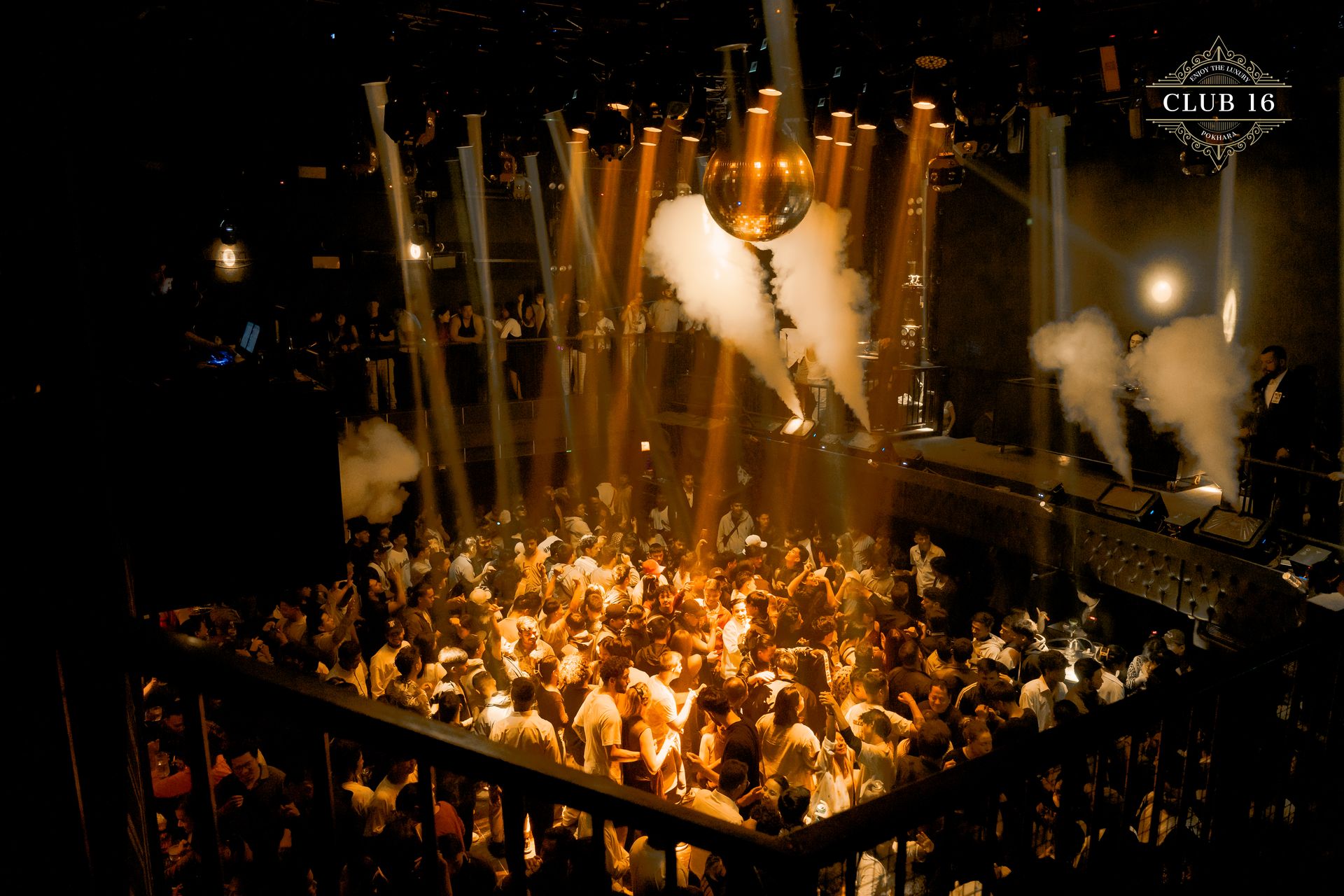
Twenty years ago, "going out" in Nepal meant finding a quiet rooftop in Thamel, ordering a Gorkha beer, and hoping someone pulled out a guitar. Today, it means pyrotechnics over a sold-out dance floor, internationally ranked DJs behind a cinema-grade sound system, and a queue of young professionals, students, and travelers who treat the night as seriously as they treat the day.
Nepal club culture has arrived. It didn't replace the lakeside candles or the acoustic jams — it grew alongside them. And like any culture worth talking about, it has a rhythm, a geography, a wardrobe, and a set of unspoken rules. Let's walk through it.
A Quick History of How We Got Here
The modern Nepali nightlife scene is younger than most people realize. The civil conflict didn't formally end until 2006, and the first wave of real live-music venues in Thamel only took off a year or two later. When the Kathmandu Jazz Conservatory opened in 2007, it quietly did something huge — it told a generation of Nepali musicians that music wasn't just a passion project. It was a career.
From there, the dominoes fell fast. The 2010s brought investment into pubs, lounges, and proper dance clubs. A growing urban middle class had disposable income and nowhere to spend it after 10 PM. Tourism surged — over a million international arrivals by late 2025, up more than 3% year over year — and travelers brought their expectations with them. A city that could offer Everest in the morning needed to offer something worth remembering at night.
By the mid-2020s, Lord of Drinks in Kathmandu had cracked the DJ Mag Top 50 clubs worldwide. Club 16 in Pokhara had made the same list a few years earlier. Nepal was no longer borrowing nightlife from Bangkok or Mumbai. It was building its own.
The Two Capitals of Nepali Nightlife
Any conversation about Nepal club culture has to start with geography, because Kathmandu and Pokhara are playing very different games — and both are winning.
Kathmandu — The Metropolitan Pulse
Kathmandu is the urban engine. Thamel, Durbar Marg, and Jhamsikhel are the three areas where most of the action happens. The sound is heavy on EDM, hip-hop, and rock. The clientele skews toward young professionals, students, and an expat scene that's grown confident enough to fill rooms on a Wednesday.
Thamel in particular has become a kind of ecosystem — backpackers stumble from live-music bars into EDM clubs into late-night noodle joints without ever needing to plan their evening. It's chaotic, loud, and unmistakably Nepali.
Pokhara — The Lakeside Escape That Grew Up
Pokhara's nightlife looks different because Pokhara is different. It's a tourist town, a trekker's hub, and a place people come to decompress after a hard week — or a hard month on the trail. The nights tend to start slower. A cocktail by Phewa Lake as the sun drops behind the Annapurnas. A plate of momos. A live band covering Mustang Thakali folk with a reggae bass line.
But after 11 PM, the energy shifts. Street 16 in Lakeside lights up. The crowd migrates from the lake-view bars toward the dance clubs. And that's where Club 16 has quietly become the anchor of Pokhara nightlife — the place the night ends, whether you planned on it or not. If you're trying to figure out how a full night in the city actually flows, our Pokhara nightlife guide walks through the standard arc most locals follow.
What Actually Defines Nepal Club Culture
Strip away the smoke machines and the neon, and every club culture comes down to a few recognizable patterns. Nepal's is no exception.
1. Music That Refuses to Pick a Lane
Nowhere else in the world do you hear a DJ seamlessly transition from Arijit Singh to Bicep to a Newari folk sample to Fred again.. in the same set — and have the dance floor stay with them the whole time. Nepali crowds are genre-agnostic. They want the drop, they want the story, they want something they recognize mixed with something they've never heard.
This is what's produced a local DJ generation — artists like Suraj Lama, DJ Bibek, and DJ Rappie — who can't get away with playing a pure house set. They've had to become storytellers. And it's why international DJs are increasingly adding Kathmandu and Pokhara to their South Asia tours: it's one of the most technically demanding crowds on the circuit. For a deeper look at who's shaping the sound, see our breakdown of Nepal's DJ scene.
2. Venues That Invest in Production
Five years ago, "good sound" in a Nepali club meant a pair of loud speakers and a prayer. Today, you'll find Funktion-One rigs, LW cinema-grade arrays, moving-head laser systems, CO2 cannons, and proper FOH engineers. Club 16's own sound system is purpose-built for the room — the kind of setup that doesn't just push volume but actually respects the music.
This matters because production is how a scene signals it takes itself seriously. When a venue invests in real lighting, real sound, and real performers, it's telling the culture: we're not a bar with a dance floor. We're a nightclub.
3. The Dress Code Is Aspirational, Not Strict
Nepal club culture has developed its own aesthetic — a mix of streetwear, designer denim, bold sneakers, and statement accessories, often with a traditional accent. You'll see dhaka topi pins on blazers. You'll see lehenga skirts on the dance floor on a Saturday. It's not forced fusion. It's just what happens when a generation is confident in both their heritage and their taste.
Most serious clubs now enforce some form of dress standard, but it's less about formality and more about effort. If you're curious about what actually works, we wrote a full guide on Nepal nightclub dress code.
4. Safety Has Become a Feature
This one is maybe the biggest shift. A decade ago, Nepali parents weren't sending their daughters to nightclubs. Today, the best venues have invested heavily in crowd management, ID checks, trained security, and — in Club 16's case — complimentary pick-up and drop-off so no one has to figure out a late-night ride home. Female solo clubbers are a visible, regular part of the crowd. That wasn't true five years ago, and it's one of the quieter markers of a culture growing up.
5. The Night Is Longer Than the Law Says
Officially, Kathmandu clubs are supposed to close at midnight. In reality, the best venues in both cities run until 4, 5, or 6 AM — and the crowd expects it. Pokhara has always been more relaxed about closing times, which is partly why Club 16 runs from 9 PM to 6 AM. A Nepali night out doesn't really start until after 11, and it's not meant to end before the sun comes up.
Why Pokhara Is the Cultural Laboratory
Kathmandu has the numbers, but Pokhara has the weather, the lake, the mountain backdrop, and a tourism economy that constantly feeds it fresh blood. That combination has turned Pokhara into a kind of testing ground for Nepal's club culture — a place where new formats, new performers, and new ideas get tried before they make it to the capital.
Belly-dance sets mixed with sparkler fountains. Live sax players riding over Afro-house tracks. Fire performers opening for a visiting DJ. Nepali folk dancers closing out the first hour of the night in full traditional costume before the EDM kicks in. A lot of that started in Pokhara. A lot of it started, specifically, at Club 16.
That's not an accident. When your venue is on Street 16 in Lakeside, a block from the lake, five minutes from every major hotel in the city, and you've already been recognized by DJ Mag's Top 100 clubs, you get room to experiment. You get the crowd, the production budget, and the reputation to try things that wouldn't fly anywhere else.
Where the Culture Is Going Next
A few things are obvious from the inside.
International bookings are ramping up. The Nepali market is now big enough and sophisticated enough to justify flying in DJs who would normally skip over us for Bangkok or Delhi. Expect more of this — and expect ticket prices to reflect it.
The production arms race continues. Venues are competing on sensory experience, not just music. Lasers, pyro, aerial performers, confetti drops, themed nights. The bar keeps rising.
Micro-scenes are forming. We're starting to see dedicated house nights, dedicated techno nights, dedicated Bollywood nights — instead of every club trying to be everything. That's a sign of maturity.
Regional travel is picking up. Kathmandu clubbers weekend in Pokhara. Pokhara regulars bus into Kathmandu for a specific DJ. The scene is treating itself like a circuit, which is exactly what healthy nightlife ecosystems do.
And somewhere in this, a kid in Dharan is probably already building the next generation of what Nepal club culture looks like. That's the good part — we're still early.
How to Experience Nepal Club Culture Yourself
If you're new to all this, don't overthink it. Pick a weekend. Start in Pokhara — it's friendlier, the pace is more forgiving, and the setting is objectively stunning. Get a drink by the lake. Eat at a rooftop with a mountain view. Then, around 11, walk to Street 16 in Lakeside. Look for the queue. Walk in. Entry at Club 16 is free. So is the pick-up and drop-off, if you need it. Stay as long as you want — we don't close until 6.
If you want to plan in advance, our events calendar shows what's happening week by week, and the gallery will give you a sense of what the room actually feels like when it's full.
Nepal club culture isn't something you read about. It's something you walk into. And once you've been in a Pokhara dance floor at 2 AM, watching a saxophonist trade bars with a DJ while the crowd loses its mind under a blue-laser ceiling — you get it.
If drinks are part of how you measure a scene, our look at Nepal cocktail culture is the natural companion to this piece — it covers the bar side of the same revolution.
And if you want to zoom out from the clubs and understand the bigger picture — the festivals, the family celebrations, the unwritten rules that locals know by heart — our full Nepal party culture guide is the wider map this piece sits inside.
Welcome to Nepal at night. The good part is just starting.