There is a week in Nepal every year when the entire country turns red.
Not metaphorically. Literally. Walk through any city in the days before Teej and you will see it — red saris drying on balconies, red bangles stacked six deep on wrists, red tika on foreheads, whole streets of women moving in groups toward a lunch that will not end until someone has danced on a table.
Most travel guides will tell you Teej is a religious fast. That is true, and it is only about a third of the story. The other two thirds happen with a sound system on, and almost nobody outside Nepal knows about it.
Teej has become, without anyone officially deciding it, the single most joyful stretch on the Nepali nightlife calendar. Here is what actually happens, when it happens in 2026, and how to be part of it.
When Is Teej 2026?
Haritalika Teej 2026 falls on Monday, 14 September (Bhadra 29, 2083 B.S.).
The celebration is not a single day, though. It runs roughly like this:
- Sunday 13 September — Dar Khane Din. The feast day. This is the party. Families and friend groups gather for dar — a huge, deliberately indulgent meal of rice, meat, sweets, fruit and yoghurt — eaten before the fast begins. There is music. There is dancing. This goes late.
- Monday 14 September — the main fast. A nirjala fast, meaning no food and no water, observed in honour of Shiva and Parvati. Temples fill from before dawn. This is a day for devotion, family and rest, not for a nightclub.
- Tuesday 15 – Wednesday 16 September. The fast breaks, rituals conclude, and the mood turns celebratory again through Rishi Panchami.
Here is the part that matters if you are planning something: the real nightlife window is the run-up, not the fast day itself. Dar gatherings start well before the 13th. Through the first two weeks of September, workplaces, friend circles, families and entire neighbourhoods host their own dar. Some people attend five or six. It is a fortnight of eating and dancing that builds to a single quiet, devotional Monday.
If you want to understand how Nepal celebrates, this fortnight tells you more than any museum will. Our wider guide to festival parties across Nepal covers the rest of the calendar, but Teej is the one that surprises people most.
Why a Fasting Festival Became a Dance Festival
Teej is a women's festival. Married women traditionally fast for the wellbeing of their husbands; unmarried women fast in hope of a good one. That is the classical framing, and it is still deeply meaningful to millions.
But something shifted over the last two decades, and it shifted from the inside.
Teej became the one occasion in the year when Nepali women gathered in large numbers, in public, entirely on their own terms — no male-centred ritual, no guest-of-honour, nobody to defer to. Just women, food, music and a floor. Songs written for Teej stopped being purely devotional and started carrying everything else: complaints about in-laws, jokes about husbands, satire about politicians, grief, gossip, ambition. Teej songs are released as singles now. They chart. They get millions of views before the festival even arrives.
The dancing followed the music. What began as folk circles in courtyards moved into restaurants, party palaces and — over the past few years — actual nightclubs with actual sound systems.
That is the version of Teej most visitors never see, and it is easily the best one.
What a Modern Dar Night Actually Looks Like
If you have only pictured women singing folk songs in a temple courtyard, recalibrate.
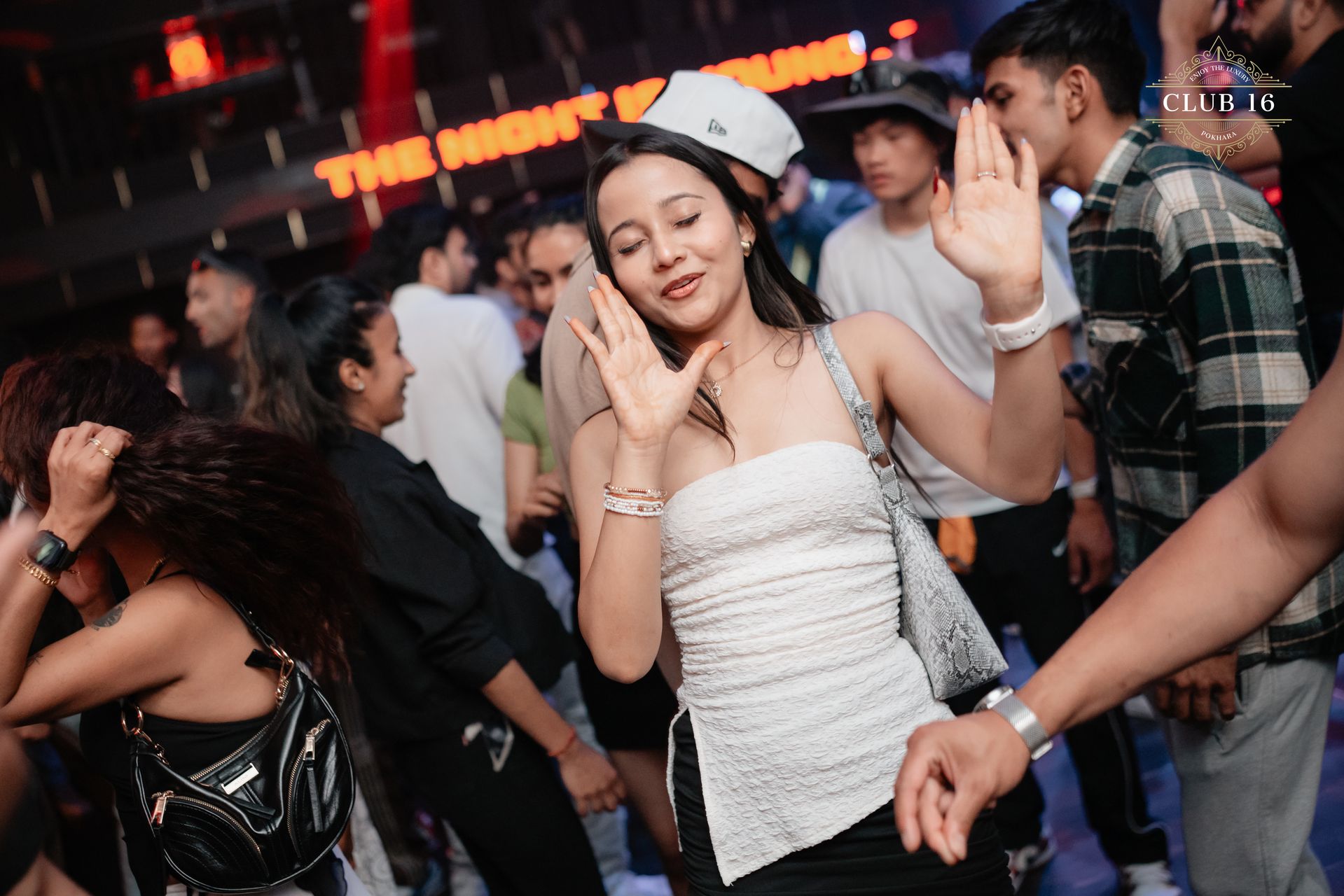
A contemporary dar night is a room full of people in red, a DJ who knows exactly which Teej track to drop and exactly when, and a dancefloor that fills within the first twenty minutes and does not clear. The energy is different from a normal Saturday — less posturing, far more joy. Nobody is at a dar night trying to look cool. That single fact changes the whole room.
The music travels a specific arc across a good Teej night:
- Early: classic Teej folk — madal and sarangi driven, the songs everyone's mother knows word for word.
- Mid: this year's new Teej releases, plus the big Nepali pop and lok dohori numbers. This is peak singalong territory.
- Later: Bollywood, then Nepali hip-hop, then the DJ takes the room wherever it wants to go.
- Late: by 2am the setlist has stopped being a Teej setlist and simply become a great night out.
That last transition is why nightclubs took over from party palaces. A restaurant hall runs out of night. A club does not. If you want a sense of how that same energy plays out during the other big festival season, our guide to Dashain and Tihar nightlife in Pokhara follows a similar shape.
What to Wear
Red. That is genuinely most of the answer.
Traditional dress is the default at any Teej gathering — red sari, kurta surwal, green and red bangles, gold where you have it. Plenty of women now wear a modern take: a red dress, a red top with jeans, a contemporary cut in festival colour. All of it works. What does not work is showing up in plain black as though it were an ordinary Saturday. You will feel it the moment you walk in.
Men are welcome at most public Teej events and should lean festive too — a daura suruwal, a kurta, or at minimum something red. Read the room: some dar gatherings are women-only by design, and that is worth respecting without needing an explanation.
Footwear matters more than people plan for. You will be dancing for hours, frequently in a circle, frequently on a floor that has seen a spilled drink. Our nightclub dress code guide has the practical detail, but the short version is: choose something you can actually move in.
Teej in Kathmandu vs the Rest of Nepal
Kathmandu does Teej at the largest scale. The Pashupatinath temple complex is the centre of gravity on the main day — tens of thousands of women in red, queuing, singing, filling the whole area with colour. As pure spectacle it is unmatched.
But scale and atmosphere are not the same thing. Kathmandu's Teej is enormous and, on the main day, genuinely crowded. Pokhara's is smaller, warmer and considerably easier to enjoy. You can attend a dar lunch by the lake, walk fifteen minutes, and be on a dancefloor by ten with none of the logistics that a Kathmandu night demands.
The lakeside setting does a lot of work here. Phewa Lake in September sits at the tail of the monsoon — the air is clear, the Annapurnas reappear behind the water, and the whole town feels freshly washed. There are worse places to spend a festival. Our guide to Lakeside nightlife maps out the area properly.
How Club 16 Does Teej
We are on Street 16, Lakeside, Pokhara, and Teej is one of our favourite weeks of the year.
The reason is simple. Teej crowds arrive already celebrating. There is no warm-up period, no first hour of people standing near the walls checking their phones. A dar group walks in at nine, still full of food, still wearing everything red they own, and the floor is busy by five past.
A few things about how we run it:
- Entry is free. Always, not just at festival time. Nobody should have to budget an entry fee into a night that is already about generosity.
- We are open 9 PM to 6 AM. Teej nights need the runway. A dar lunch that starts at one in the afternoon does not produce people who are ready to leave at midnight.
- The sound system is LW cinema-grade. This matters more for Teej than for almost anything else we host. Teej songs are vocal-led, with madal underneath and a lot of midrange detail that cheap systems flatten into mush. On a proper rig, you hear the sarangi. People notice.
- Free pick-up and drop. Say the word and we will collect your group and get everyone home. During a festival week, when half of Lakeside is celebrating, this is the single most useful thing we offer.
- VIP lounge and hookah for groups who want a base — somewhere to leave bags, regroup between songs, and actually hear each other talk.
Teej also draws one of the biggest women's crowds of our year, which is the same crowd that makes our regular ladies' night work so well. Same energy, larger scale, better outfits.
Six Things Worth Knowing Before a Teej Night
- Book early if you are a group. Dar season means a fortnight of group bookings across Pokhara. The good tables go first.
- Eat the dar. Do not treat it as an obstacle before the party. It is the point, and you will need it.
- Respect the fast day. If people in your group are fasting on the 14th, that is not a night to drag them out. Celebrate on the 12th, the 13th, or after the fast breaks.
- Learn one chorus. Any Teej song. When four hundred people sing a line and you are the only person silent, you will wish you had spent five minutes on YouTube.
- Arrange your ride before you leave. Or just use our pick-up. Festival nights are the worst possible time to be negotiating on a street at 3am.
- Bring a camera, use it early. The outfits are at their best before three hours of dancing. Our gallery is mostly proof of this principle being ignored.
Planning Your Teej 2026
If you are travelling to Nepal in September, plan around the 12th to the 16th. You will land in the middle of the best two weeks of the Nepali social calendar, in the best possible weather window, at a moment when the whole country is in an unusually good mood.
If you live here, you already know what dar season does to a diary. The only real advice is to say yes to more of them than feels sensible.
And if you want the last dar of your season to run until sunrise rather than ending politely at eleven — you know where we are. Check what we have lined up on our events page, or get in touch and we will sort a table for your group.
Street 16, Lakeside, Pokhara. Wear red. We will handle the rest.