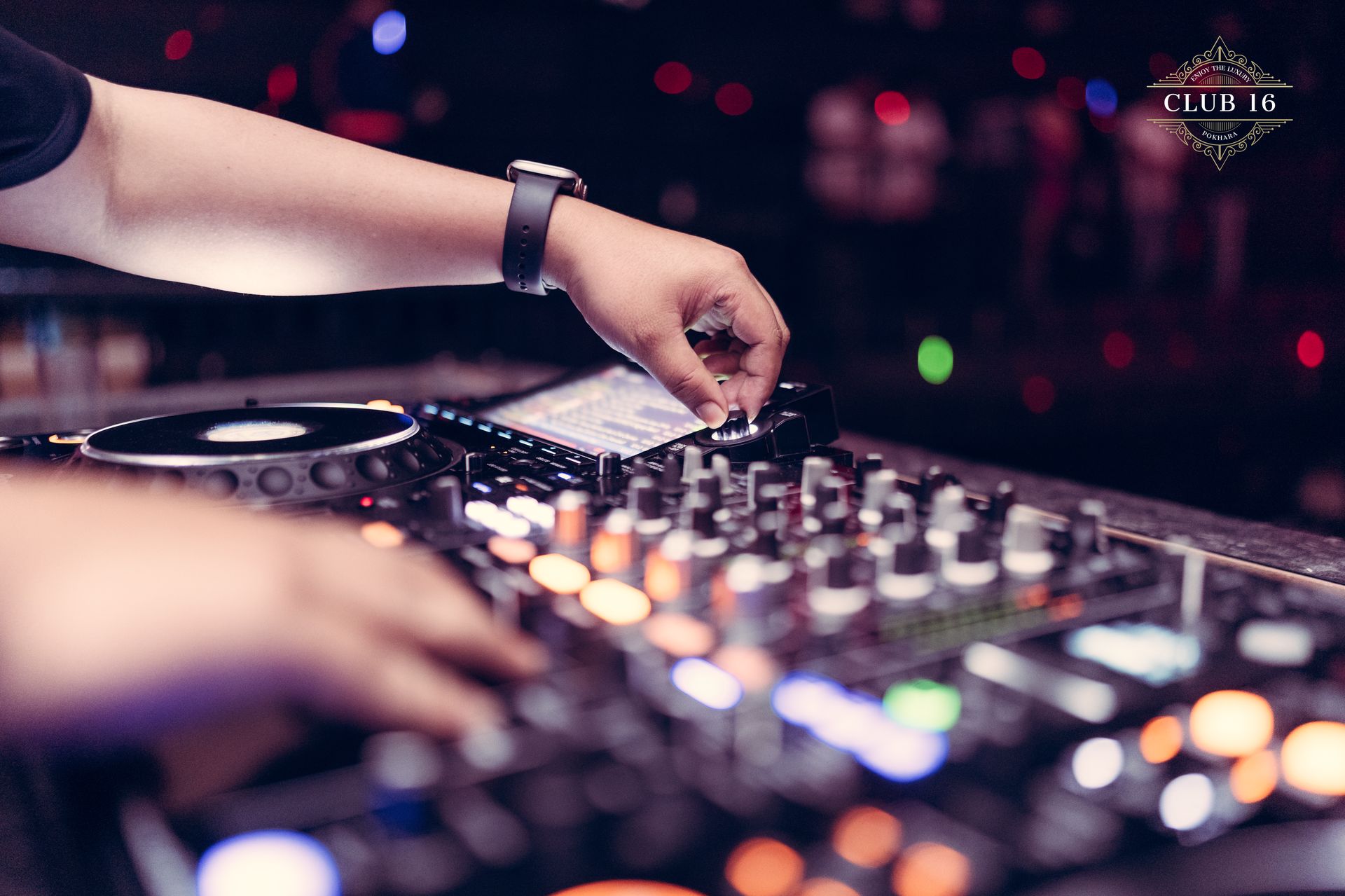
Ask ten people in Lakeside who the best DJ in Pokhara is and you'll get eleven answers. Someone will name the guy who dropped a Nepali folk edit at 2 AM last Saturday and turned a half-full room into a riot. Someone else will swear by the technician who can beatmatch three decks without looking down. A third will just describe a night — no name, no genre, just "that one where nobody sat down."
That last answer is closer to the truth than the other two.
Because "best DJ" isn't really a question about a person. It's a question about what happens between 11 PM and 4 AM when the right selector meets the right room, the right sound system, and a crowd that trusts them enough to follow. Pokhara has more DJ talent per square kilometre than most people realise. What it has far less of is the infrastructure to let that talent actually perform. This is an honest look at both.
What Actually Makes a DJ "The Best" in a City Like Pokhara
Forget the technical stuff for a second. Beatmatching is table stakes in 2026 — sync buttons exist, and any working DJ can mix two records cleanly. That's not the differentiator anymore.
Here's what is:
Reading a room in real time. Pokhara crowds are unlike anywhere else in Nepal. On a single Friday, a dance floor might hold trekkers who came down from Annapurna that afternoon, a group of Kathmandu weekenders, Indian tourists on a four-day trip, a table of local university students, and a couple celebrating an anniversary. Five completely different musical reference points in one room. A DJ who plays only their favourite genre will lose 80% of that floor within twenty minutes. A great one finds the three or four tracks per hour that everybody knows, uses them as anchors, and takes risks in between.
Knowing the local canon. There's a specific set of records that detonate a Nepali dance floor and nowhere else. Certain Bollywood drops. Certain Nepali pop and folk-fusion edits. Certain remix versions that only circulate here. A DJ flown in from abroad with a flawless techno set will technically outplay a local selector and still empty the room. The local knowledge is the skill.
Pacing an entire night, not a set. This is the one that separates residents from guests. A visiting DJ plays 90 minutes and leaves a peak behind. A resident has to build from a near-empty 9 PM room to a packed 1 AM peak, hold it, and then land the plane by 5 AM without the energy ever falling off a cliff. That's a completely different discipline, and it's the reason a club's resident DJs are usually its most underrated asset.
If you want the wider national picture on how this developed, our breakdown of Nepal's DJ scene traces how the country went from wedding-party sound systems to genuine club culture in about fifteen years.
A great DJ also needs a room that can carry them — which is why the venues with the most serious rigs consistently make their residents sound better, something we unpack in our guide to the best sound system in a Nepal nightclub.
The Styles You'll Actually Hear in Pokhara
Pokhara's DJ scene isn't monolithic. Walk Lakeside on a Saturday and you'll pass through at least four distinct sonic worlds within a few hundred metres.
Bollywood and Desi Commercial
The broadest-appeal sound in the city, and the hardest to do well. Anyone can play the current chart hits. The genuinely good Bollywood DJs are the ones who know the edits — the double-time drops, the mashups that flip a classic into a club-ready arrangement, the moment to bring in a dhol loop over a house beat. When it's done right, the reaction is unmatched. We wrote a whole piece on what a proper Bollywood night in Pokhara sounds like when the selector actually knows what they're doing.
Commercial House and EDM
Big-room, festival-adjacent, built for hands-in-the-air moments. This is the international-tourist-friendly sound and it dominates the peak hours in most large venues. The risk is predictability — a DJ who leans entirely on the same twelve festival anthems every weekend gets stale fast for regulars. If that's your sound, our guide to a Pokhara EDM night walks you through how the night unfolds from warm-up to sunrise.
Hip-Hop and Afro-House
Growing fast, especially with younger local crowds. Afro-house in particular has taken over the late-slot in Pokhara over the past two years — it's got the groove to keep people moving at 3 AM without the fatigue that constant peak-time EDM causes.
Underground Electronic
The smallest scene but the most passionate one. Deep house, melodic techno, occasional drum and bass. It doesn't fill rooms every weekend, but it produces the city's most technically ambitious DJs, and it's where a lot of the best selectors sharpen their skills before they learn how to work a bigger floor.
The genre mix shifts constantly. If you want to know where the sound is heading, our look at Nepal club music trends for 2026 covers what's rising and what's finally fading out.
Why the Room Matters as Much as the DJ
Here's the part most "best DJ" lists get wrong: a DJ is only ever as good as what the crowd can hear.
You can put a world-class selector behind a mediocre PA and the set will fall flat. Bass that doesn't reach the back of the room. Highs that turn harsh at volume. A midrange so muddy that a vocal hook disappears. The crowd won't be able to articulate the problem — they'll just feel like the night is somehow not landing, and they'll leave earlier than they meant to.
This is why sound infrastructure is the quiet foundation of any real DJ scene. At Club 16 on Street 16, Lakeside, the room runs an LW cinema-grade system — the same class of rig used in commercial cinema, tuned for a dance floor. The practical difference is that a DJ can actually use dynamics. They can drop the low end out entirely for eight bars and the room stays with them, because when the bass comes back it hits with enough physical weight to justify the wait. On a weaker system, that trick just sounds like the music stopped.
Good monitors matter too. A DJ who can't hear their own cue mix cleanly plays conservatively — safe transitions, no risks. Give them a booth that works and the same person plays a noticeably braver set.
The Resident vs. Guest Question
Pokhara's bigger rooms run a two-tier model, and understanding it helps you plan a night out.
Residents hold the room down week after week. They know the regulars by face, they know which table wants Nepali pop and which one wants house, and they know exactly what to play at 12:40 AM on a rainy Wednesday. They're the reason a venue feels consistent.
Guests bring the event energy. A booked-in DJ from Kathmandu, an international name passing through, a touring act on a Nepal run — these are the nights that sell out, that people plan a trip around. Club 16 has hosted names that put the venue on the national map, and the guest calendar is genuinely worth checking before you plan a weekend. The current lineup lives on the events page.
The best nights in the city are usually the ones where both happen: a resident warms up properly and hands over a floor that's already primed, and the guest walks into a room that's ready rather than one they have to build from scratch. Our roundup of the best DJ nights in Nepal covers which of these formats consistently deliver.
How to Find the Best DJ on Any Given Night
Practical advice, because "best DJ in Pokhara" changes weekly.
- Check the lineup before you go, not when you arrive. Most venues post their weekend DJ by Wednesday or Thursday. Showing up blind on a Saturday is how you end up in a room playing a genre you don't like.
- Arrive by 11 PM if you care about the music. The 9–11 PM slot is warm-up. The genuinely interesting selecting starts once the floor has bodies on it.
- Judge a DJ by the third hour, not the first thirty minutes. Anyone can open strong. Staying interesting at 2:30 AM is the real test.
- Watch the floor, not the booth. If people are dancing with their backs to the DJ and their eyes on each other, that DJ is doing their job. A crowd all facing the booth filming is a moment; a crowd lost in the music is a night.
- Ask the bar staff. They've watched every DJ in the city work. They know who's good.
Want to Be the Answer to This Question?
Here's the thing about Pokhara's DJ scene: it's small enough that a serious newcomer can genuinely break in within a year. There's no gatekeeping industry, no decade-long queue. What there is, is a shortage of people who've properly learned the craft rather than just downloaded a controller app.
Club 16 runs DJ courses out of the venue for exactly this reason — real equipment, real booth time, taught by people who work the room every weekend. If you've ever stood on a dance floor and thought you could do better, that's a more reasonable ambition here than almost anywhere else. Details on how the programme works are in our guide to the Club 16 DJ course.
The Honest Answer
The best DJ in Pokhara on any given night is the one playing to a full room, on a system that does their selections justice, in front of a crowd that came out ready. Names change. Residencies rotate. Guests fly in and out.
What stays constant is the room. Club 16 is open 9 PM to 6 AM with free entry, free pick-up and drop across Lakeside, a VIP lounge and hookah for when you need a break from the floor, and a booth that the city's best selectors actually want to play in. That last part is why the good ones keep coming back — and why the answer to "who's the best DJ in Pokhara?" is usually found on the same dance floor.
Come find out for yourself. Check what's on this week, or get in touch if you want a table sorted before you arrive. And if it's your first night out in the city, start with our full Pokhara nightlife guide — it'll save you a lot of wandering.
The decks are warm. See you on the floor.