The Rise of Electronic Music in Nepal
A decade ago, if you told someone that Nepal would become one of South Asia's most exciting electronic music destinations, they would have laughed you out of the room. Nepal was known for trekking, temples, and momos — not bass drops and laser shows. But something has shifted dramatically, and the Nepal electronic music scene in 2026 is nothing short of extraordinary.
What started as small gatherings in Kathmandu basements has evolved into a full-blown cultural movement. DJs are headlining massive events, producers are getting international recognition, and venues have invested millions in cinema-grade sound systems that rival anything in Bangkok or Bali. The beats echoing through the Himalayan valleys are no longer just folk melodies — they are deep house, techno, drum and bass, and everything in between.
How Nepal's EDM Culture Found Its Voice
The roots of Nepal's electronic music culture trace back to the early 2010s, when a handful of passionate DJs started importing the sounds they had heard while studying or travelling abroad. Thamel's bar scene provided the first stages, but the sound was raw, the equipment was basic, and the audiences were small.
Everything changed when venues began taking the music seriously. Instead of treating DJs as background noise for drinking, forward-thinking clubs started building proper sound infrastructure, booking international talent, and creating immersive experiences that went beyond just pressing play on a playlist. If you are curious about how Nepal's nightlife scene evolved, the transformation has been remarkable to witness.
The Sound System Revolution
Perhaps the single biggest catalyst for Nepal's electronic music boom was the arrival of professional-grade sound systems. When Club 16 in Pokhara installed an LW cinema-grade audio system — the kind you would find in premium European nightclubs — it set a new standard for what Nepali clubbers could expect. Suddenly, every kick drum hit with chest-thumping precision, every synth line shimmered with crystal clarity, and every bassline rolled through the room like thunder across Phewa Lake.
This was not just an equipment upgrade. It was a statement: Nepal deserves world-class electronic music experiences, and venues are willing to invest to make it happen. Other clubs followed suit, and today the overall audio quality across Nepal's top venues is genuinely impressive by international standards.
The Genres Driving Nepal's Dance Floors
Nepal's electronic music scene is refreshingly diverse. Unlike some markets that fixate on a single genre, Nepali audiences have developed broad and sophisticated tastes.
Deep House and Melodic Techno
The dominant sound in Nepal's premium clubs leans toward deep house and melodic techno — think Anjunadeep, Afterlife, and Tale of Us vibes. These genres pair perfectly with the contemplative energy of the Himalayan landscape. There is something almost spiritual about hearing a slow-building melodic techno track while surrounded by mountains.
Drum and Bass and Dubstep
The younger crowd, especially in Kathmandu's underground scene, gravitates toward heavier sounds. Drum and bass nights draw packed rooms of headbangers, and dubstep drops still send shockwaves through basement venues in Thamel. For a deeper look at what Kathmandu offers compared to other cities, check out our Kathmandu vs Pokhara nightlife comparison.
Nepali Fusion Electronic
The most exciting development is the emergence of Nepali fusion electronic music. Local producers are sampling traditional instruments — the madal, sarangi, and bansuri — and weaving them into electronic productions. The result is something genuinely unique: tracks that feel unmistakably Nepali while hitting as hard as anything coming out of Berlin or Amsterdam. This fusion sound is what sets the Nepal electronic music scene apart from its regional neighbours.
Commercial EDM and Festival Anthems
For big events and peak-hour energy, commercial EDM still rules. Nepal's best DJ nights feature everything from Martin Garrix-style big room anthems to Calvin Harris-inspired vocal house, and the crowds go absolutely wild for the build-up-and-drop formula.
Where to Experience Electronic Music in Nepal
Pokhara: The Undisputed Capital of Nepal's Club Scene
While Kathmandu has the volume of venues, Pokhara has the quality. The lakeside city has positioned itself as Nepal's premium nightlife destination, and for electronic music lovers, one venue stands head and shoulders above the rest.
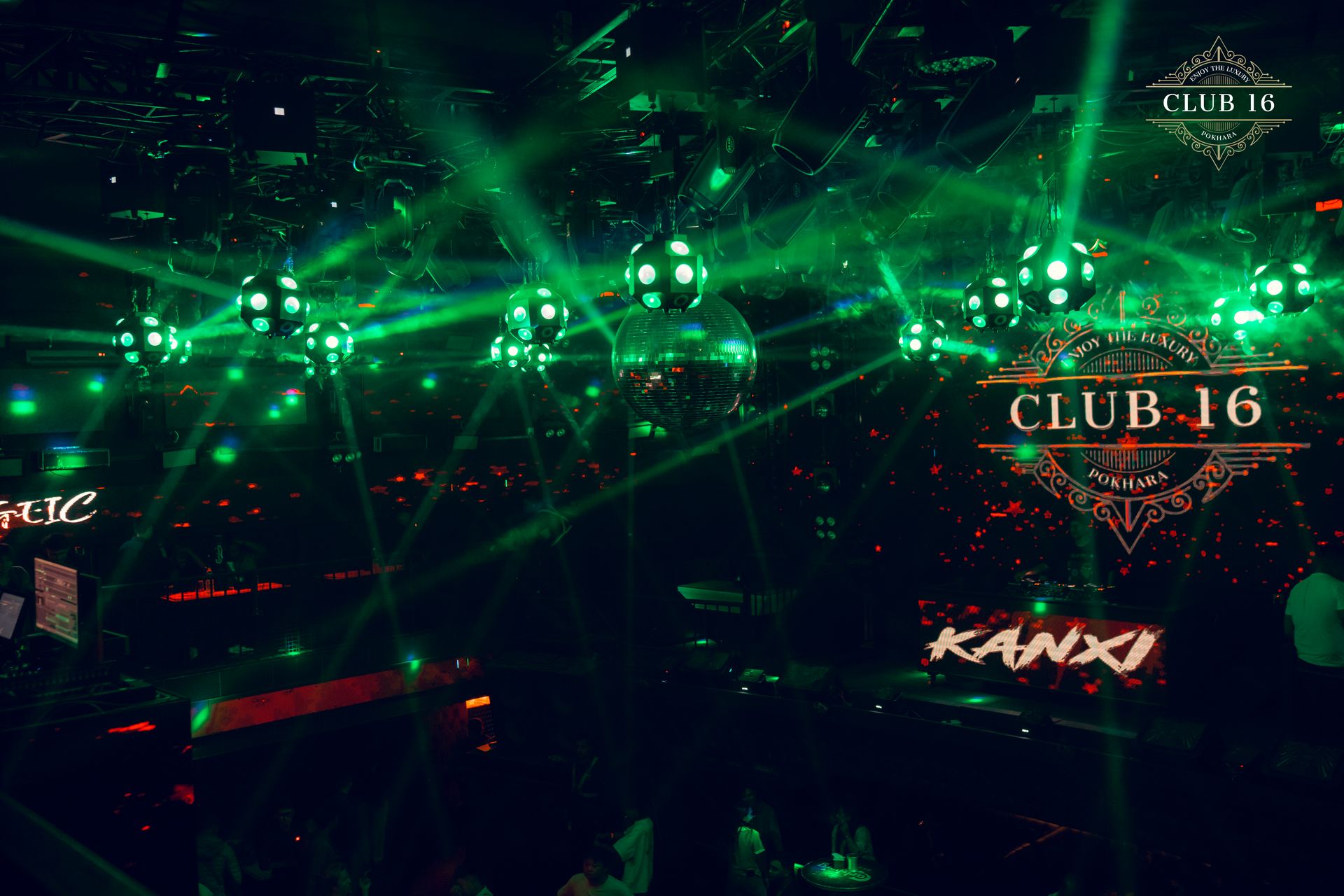
Club 16 on Street 16, Lakeside, is where Nepal's electronic music scene reaches its apex. Open from 9 PM to 6 AM with free entry, this is not just a nightclub — it is an electronic music temple. The LW cinema-grade sound system delivers audio fidelity that visiting international DJs consistently rave about. The laser and light show transforms the space into something you would expect in Ibiza, not a Himalayan city of 300,000 people.
What makes Club 16 special for electronic music is the programming. Rather than playing it safe with predictable playlists, the venue brings in DJs who actually curate journeys — taking the crowd from warm-up grooves through peak-hour bangers and into sunrise-ready ambient sets. The Pokhara party scene revolves around Club 16, and for good reason.
Club 16 also offers something rare in Nepal: a proper DJ course where aspiring electronic music artists can learn the craft on professional equipment. This investment in the next generation of DJs is exactly what the scene needs to keep growing. And it's not just electronic — the venue's live music programming blends live saxophone, MC performances, and guest artists with DJ sets to create a hybrid sound that's become Pokhara's signature.
Kathmandu: The Underground Hub
Kathmandu remains the breeding ground for new talent. The Thamel nightlife district hosts dozens of venues ranging from intimate cocktail bars with lounge DJs to larger clubs pushing harder sounds. The underground rave scene operates through word-of-mouth events in warehouses and rooftop spaces, giving the capital a raw, authentic energy.
Festival Culture
Nepal's outdoor festival scene is still developing but shows enormous potential. Events combining music, art, and adventure have started popping up in stunning natural locations — imagine a techno festival with Annapurna as the backdrop. As the Nepal party destinations expand, expect more multi-day electronic music festivals to emerge.
Nepal's Rising DJ Talent
The depth of homegrown DJ talent in Nepal is genuinely surprising. A new generation of producers and performers has emerged, many of them trained on professional equipment at venues like Club 16 and now holding their own alongside international guest DJs. For a closer look at the artists, trends, and fusion sounds driving this movement, explore our deep dive into Nepal's DJ scene.
What Sets Nepali DJs Apart
Nepali DJs bring something unique to the decks: a cultural perspective shaped by living in one of the world's most dramatic landscapes. Their sets often have a cinematic quality — builds that feel like ascending a mountain pass, drops that hit like avalanches, and ambient interludes that evoke misty mornings over Phewa Lake. This is not generic festival fare; it is music with a sense of place.
The DJ course programme at Club 16 has been instrumental in developing this talent pipeline. By giving aspiring DJs access to professional CDJs, mixers, and mentorship from experienced selectors, the venue has helped launch careers that might otherwise never have started. Several Club 16 alumni are now resident DJs at major venues across Nepal and India.
The Technology Powering Nepal's Electronic Music
Sound and Production
Nepal's top venues have invested heavily in acoustic engineering. Club 16's LW system is the gold standard, but across the country, clubs are upgrading from basic PA setups to properly tuned, room-calibrated audio systems. This technical evolution means producers can create more nuanced music knowing it will actually be heard the way it was intended.
Visual Production
The visual side of Nepal's electronic music scene has levelled up dramatically. LED walls, moving-head intelligent lights, laser systems, and pyrotechnic effects have become standard at premium venues. Club 16's production is particularly notable — their light shows are synchronised to the music, creating an immersive sensory experience that elevates the DJ set into something closer to performance art. Check out the gallery to see what we mean.
The Role of Social Media
Platforms like Instagram and TikTok have been crucial amplifiers for Nepal's electronic music scene. Clips of packed dance floors, insane light shows, and DJ sets from venues like Club 16 regularly go viral, attracting both domestic tourists from Kathmandu and international visitors who had no idea Nepal had this kind of nightlife. For tips on your first visit, our nightlife guide for tourists covers everything.
What Makes Nepal's Electronic Music Scene Special
The Setting
No other electronic music scene in the world has this backdrop. Dancing until sunrise in a club surrounded by the Annapurna range is an experience you simply cannot replicate in Berlin, London, or New York. The juxtaposition of ancient Himalayan culture and cutting-edge electronic music creates a vibe that is utterly unique.
The Community
Nepal's scene is still small enough to be genuinely communal. DJs know each other, promoters collaborate rather than compete, and regulars at venues like Club 16 become part of an extended family. There is none of the velvet-rope pretension that plagues electronic music scenes in more established markets. Everyone is welcome — and with free entry and free pick-up and drop service, the barriers to joining the party are essentially zero.
The Value
A night out experiencing world-class electronic music in Nepal costs a fraction of what you would pay in Southeast Asian hubs like Bangkok or Bali. Premium cocktails, VIP bottle service, hookah lounges — it is all available at prices that feel almost too good to be true. Our Pokhara nightlife budget guide breaks it all down.
The Future of Electronic Music in Nepal
The trajectory is clear: Nepal's electronic music scene is only going to get bigger. With venues like Club 16 continuing to invest in sound, production, and talent development, the infrastructure is in place for exponential growth.
Expect to see more international DJ exchanges, where Nepali talent plays abroad and global headliners make regular stops in Pokhara and Kathmandu. Expect dedicated electronic music festivals in Nepal's extraordinary natural settings. And expect the unique Nepali fusion sound — traditional instruments meeting modern production — to gain recognition on the global stage.
The Nepal electronic music scene is not just catching up with the rest of the world. It is carving out something entirely its own: a sound and an experience rooted in one of the most extraordinary places on Earth.
Experience It for Yourself
Words can only capture so much. To truly understand why Nepal's electronic music scene is generating global buzz, you need to feel the bass hit your chest at 2 AM, see the lasers cut through a cloud of stage haze, and look around at a room full of people completely lost in the music.
Club 16 on Street 16, Lakeside, Pokhara is where it all comes together. Free entry, open 9 PM to 6 AM, with an LW sound system that will genuinely redefine what you thought was possible from a nightclub in Nepal. Check our upcoming events and come see what the hype is about. We will even pick you up — free ride, no excuses.
The mountains are calling. And they are calling to a very, very good beat.