Ask ten travel blogs when to visit Pokhara and you will get the same answer ten times: October and November, for the mountain views.
They are not wrong. They are also only telling you half the story — the daytime half. Because Pokhara does not have one season, it has two overlapping ones, and the calendar that governs the best trekking weather is not the same calendar that governs the best nights out.
There are weeks when the Lakeside strip is genuinely electric — every table taken, international DJs passing through, the dance floor packed by midnight and still going at five. And there are weeks when the same strip is quiet enough to hear the lake, drinks are half the price, and you can walk into any venue and get the best seat in the house.
Neither one is better. They are just different trips. This guide tells you which weeks are which, so you can book the one you actually want.
The Short Answer
If you want the biggest, loudest, most crowded nights of the year: mid-October through early January. That window covers Dashain, Tihar, peak trekking season, Christmas and New Year, and it is when Pokhara's nightlife runs at absolute full capacity.
If you want great nights without the crowds: February through April. Warm evenings, clear skies, a healthy crowd, and none of the peak-season scramble for tables.
If you want the cheapest trip and do not mind rain: June through August. Fewer tourists, softer prices, and — contrary to what most people assume — the clubs stay just as busy, because the party simply moves indoors.
Now the detail.
October to November: Peak Everything
This is Pokhara at maximum volume, and it is not close.
Two things collide in these eight weeks. The trekking season peaks, which means thousands of people come off the Annapurna Circuit and the Poon Hill trail every week with three weeks of mountain sobriety behind them and one very specific idea of how to celebrate. And Nepal's two biggest festivals — Dashain in mid-to-late October, Tihar in early November — fill the city with Nepalis home from Kathmandu, from the Gulf, from everywhere.
The result is the single best crowd mix of the year: trekkers, backpackers, Indian and Chinese tourists, Kathmandu weekenders and locals celebrating, all in the same room. If you have ever wondered what the Pokhara party scene looks like at its absolute ceiling, this is it.
What to expect practically:
- Weeknights behave like weekends. Tuesday in peak October draws a crowd that would count as a good Friday in March.
- The mountain weather is perfect, which matters more than it sounds. Clear skies mean the whole city is in a good mood by the time the sun goes down.
- Book everything ahead. VIP tables, accommodation, flights. This is the one time of year when walking in with a group of eight and expecting a table is optimistic.
- Evenings get cold. By late November the temperature drops fast after dark. Bring a layer for the walk over — you will want it at 4 AM even if you do not at 9 PM.
The festival weeks deserve their own mention. The days belong to family, temples and tradition, but the nights belong to Lakeside — and our guide to Dashain and Tihar nightlife in Pokhara explains exactly how that rhythm works and which nights actually go off.
This is also when trekkers hit the strip in numbers. If you are coming straight off the trail, our piece on Pokhara nightlife after trekking covers the specific art of going from a teahouse to a dance floor without falling over.
December to Early January: The Big Nights
December cools down properly, and a lot of the trekking crowd thins out after the first week. Then the calendar loads up again.
Christmas in Pokhara is bigger than most visitors expect — not as a religious occasion, but as a party occasion, the way it works across most of Asia. And New Year's Eve is unambiguously the single biggest night of the Pokhara calendar. Nothing else comes close: the whole strip is out, the countdown is genuinely loud, and venues plan for it months ahead.
The counter-intuitive part is that the cold actually helps. Rooftop terraces empty out and everyone funnels into the proper indoor venues, which concentrates the crowd rather than spreading it thin. Our Pokhara winter nightlife guide covers how the season reshapes where the night goes.
One planning note: if you want to be inside a specific room on 31 December, book in November. Not in late December. The good tables in Pokhara are spoken for weeks in advance.
February to April: The Smart Traveller's Window
This is the season locals quietly recommend and guidebooks routinely undersell.
The weather is excellent — warm days, mild evenings, clear enough for mountain views most mornings — and the crowds have gone home. Prices drop off their peak. You can get a flight, a room and a table without planning your trip around availability.
The nightlife does not drop off with the crowds, which surprises people. What changes is the composition: fewer trekkers, more long-stay travellers, more Nepali weekenders, more people who are actually there for the night rather than for one blow-out after a hike. The rooms feel less like a tourist attraction and more like a proper local scene.
March brings Holi, which is the most riotously fun day on the entire Nepali calendar and turns into a night that people plan whole trips around. April brings Nepali New Year — Baisakh — with another round of celebrations.
If you only get one week in Pokhara and you want the best balance of weather, price and atmosphere, take a week in March. The full picture of what a Lakeside night looks like is in our Pokhara nightlife guide for 2026.
May: The Quiet Gap
May is Pokhara's genuine off-season and the honest answer is that it is the weakest month of the year for nightlife.
It gets hot. Pre-monsoon haze rolls in and the mountains disappear behind it. The trekking season has ended and the monsoon backpacker crowd has not yet arrived. Weeknights can be slow.
That said — weekends still deliver, prices are at their lowest, and if you value having a venue that is comfortable rather than crowded, May has a real appeal. Just do not plan a Tuesday night around a packed dance floor.
June to September: Monsoon, and Why It Is Underrated
Here is the thing nobody tells you about monsoon in Pokhara: it mostly rains at night, in heavy bursts, and then stops. It is not a four-month drizzle.
More importantly, rain does not affect an indoor venue with a proper roof and a proper sound system. What it affects is the rooftop bars and the lakeside terraces — which means the crowd that would have spread across twenty outdoor spots gets concentrated into the handful of venues that are genuinely built for weather. The dance floor ends up fuller, not emptier.
Prices are at their most generous. The city is green in a way it never is in October. And the crowd skews toward people who are travelling properly rather than ticking a box.
We made the full argument in our Pokhara monsoon nightlife guide, and it holds: if your budget matters more than your photos, monsoon is a genuinely good call.
The one practical thing to sort out is transport. Walking twenty minutes through a monsoon downpour at 11 PM will ruin an outfit and a mood. Pick a venue that solves that for you.
Which Nights of the Week Actually Matter
Season sets the ceiling. The day of the week sets the floor.
- Friday and Saturday are the main events year-round. In peak season, arrive before 11 PM if you want a table.
- Wednesday and Thursday are the sleeper picks — ladies nights, drink deals, and a crowd that is out because it wants to be rather than because it is the weekend.
- Sunday to Tuesday are quiet outside of October to January and festival weeks.
- Festival and holiday eves outrank everything, including Saturdays. A Tihar weeknight beats an ordinary weekend every time.
Where the Night Goes, in Every Season
The reason seasonality matters less in Pokhara than in most cities is that the strip has one venue that runs at full strength twelve months a year.
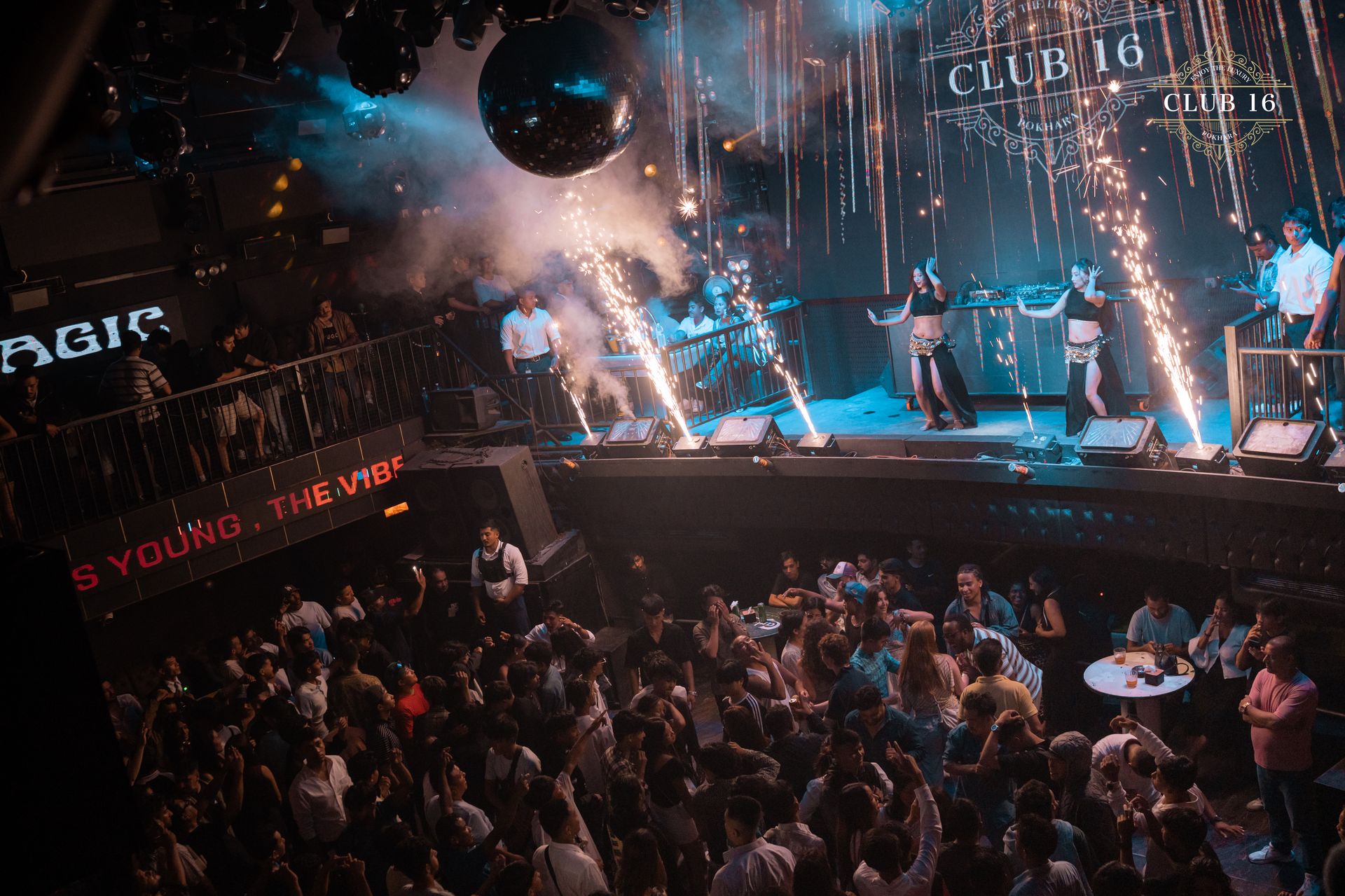
Club 16 on Street 16, Lakeside does not have an off-season. Entry is free in October and free in May. The doors open at 9 PM and stay open until 6 AM in peak December and quiet June alike. The LW cinema-grade sound system sounds the same to a packed room as it does to a comfortable one, and the free pick-up and drop-off matters in exactly the two situations this guide keeps coming back to — freezing December nights and soaking monsoon ones.
That consistency is the point. In a lot of destinations, visiting off-peak means accepting a lesser version of the place. Here it means the same room, the same sound, the same lasers, fire performers and stage pyrotechnics, with more space to enjoy them and a shorter wait at the bar.
If you are travelling in peak season, book the VIP lounge ahead — bottle service, premium hookah and the best sightlines in the venue, and it is the difference between a great night and standing up for five hours. If you are travelling off-peak, you probably do not need to, but it is still the best seat in Pokhara.
Whichever month you land in, our hour-by-hour Pokhara nightlife itinerary will tell you how to time the evening once you are here.
So: When Should You Actually Come?
- You want the biggest night of your life: last week of December, or Dashain and Tihar in October–November.
- You want great nights and clear mountains without the scramble: March.
- You want the best value in Nepal: July or August.
- You are combining a trek with a celebration: late October or early November, and give yourself two nights in Pokhara at the end, not one.
- You want the city half to yourself: May, weekends only.
There is no bad month to be on the Lakeside strip. There are only different versions of the same very good night — and now you know which one you are booking.
Have a look at what is coming up on our events page, then get in touch to sort your table and your free pick-up before you arrive. Whatever the season, the doors open at nine and the night runs until the sun comes up over the Annapurnas.
We will see you on the floor.